
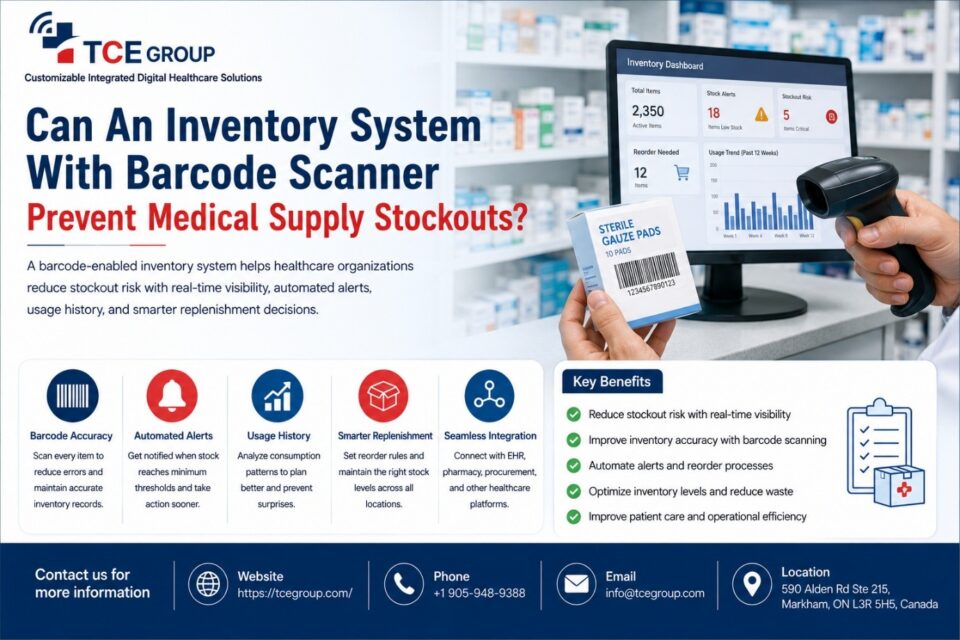
Summary: A barcode-enabled pharmaceutical inventory system can reduce stockout risk by keeping supply meeting demand, setting minimum-stock thresholds, automated reordering, and using usage history for predictable replenishment decisions. Barcode transactions improve data accuracy, while integrations with pharmacy, EHR, procurement, and virtual pharmacy workflows create stronger visibility and faster, safer inventory decisions, higher patients’ satisfaction and dispensing efficiency.
A pharmacy discovers a critical item is nearly gone only after a nurse or patient requests it. A well-designed inventory system with barcode scanner can eliminate that gap earlier and trigger timely replenishment.
Yes, barcode-enabled inventory can reduce medical supply stockouts, but it cannot prevent them alone. You need thresholds, alerts, usage data, barcode transactions, and clear replenishment rules working together.
Why Do Medical Supply Stockouts Start So Quietly?
Stockouts often begin quietly. A few boxes leave the shelf, a delivery arrives late, or staff forget to record a manual issue. Small gaps can become serious shortages before anyone notices.
Your first fix is visibility. The inventory platform should show current quantity, reserved stock, incoming stock, and reorder status for every critical medical supply, medication, and storage location.
How an Inventory System with Barcode Scanner Eliminate These Warnings
A minimum-stock threshold acts like a safety line. When available stock reaches that level, the inventory system with barcode scanner can reorder the item before supply falls into a critical range.
Set thresholds by item, location, demand, and lead time. A busy emergency department may need a higher buffer than a low-volume clinic because usage patterns, lead times, and risks differ.
Automated alerts turn inventory data into action. When stock reaches its threshold, the system is programmed to include it in the re-order list by the right staff or automatically upload the list to the suppliers, thus reducing dependence on memory and manual shelf checks.
Alerts work best when they are specific. A useful message should identify the item, location, current quantity, threshold, recent usage, and suggested reorder quantity when your rules support that calculation.
Why Usage History Makes Replenishment Smarter
Usage history adds another layer. Your system can examine past consumption to reveal steady demand, seasonal changes, sudden spikes, or unusual patterns that deserve human review before ordering.
For example, if a clinic normally uses 100 syringes weekly but suddenly uses 180, the system can highlight the change. That signal may justify adjusting reorder levels.
Barcode transactions make the data trustworthy. Staff scan supplies when receiving, moving, dispensing, returning, or adjusting inventory. Each transaction creates a digital record instead of relying on handwritten counts.
This matters because bad inventory data creates false confidence. If ten units leave the shelf without being recorded, the dashboard may show ten units that do not exist.
What Does Barcode Inventory Management Actually Control?
A barcode inventory management system can reduce that gap by linking each scan to an item, quantity, location, user, and transaction type, depending on your configured workflow.
The scan also speeds routine work. Staff do not need to type long item codes repeatedly. Fewer manual entries can mean fewer data-entry mistakes and faster inventory updates across products and locations. In addition, it eliminates miscount, cross contamination, and eliminates expiry errors.
The real advantage appears when these controls work as one chain. Barcode scans update stock, thresholds evaluate availability, alerts notify staff, and usage history supports better reorder decisions.
That chain creates an earlier warning. Instead of asking, “Are we running out?” your team can ask, “Why is demand changing, and what action should we take now?”
Can Automation Guarantee Zero Stockouts?
Can automation stop every stockout? No. Supplier delays, recalls, demand surges, inaccurate master data, and unexpected clinical events can still disrupt supply availability despite strong controls.
The goal is risk reduction, not a promise of zero shortages. A responsible healthcare system should make risks visible, support decisions, and preserve human oversight for exceptions.
Your replenishment workflow also needs clear ownership. Define who reviews alerts, who approves purchases, who checks substitutions, and who confirms receipt after an order arrives.
Without ownership, automation can create alert fatigue. Too many warnings become background noise. Set practical thresholds and escalation rules so critical items receive faster attention than low-risk supplies.
Where Should Inventory Systems Connect?
Integration can make the workflow stronger. Your inventory platform may connect with EHR systems, pharmacy software, procurement tools, virtual pharmacy workflows, and other approved healthcare applications.
A pharmacy dispensing inventory management system can connect dispensing activity with stock records, helping you understand what leaves inventory and when replenishment may become necessary.
For hospital networks, location-level visibility is especially useful. You can compare stock across departments, identify uneven demand, and coordinate transfers before placing unnecessary emergency orders.
You should also protect inventory data quality. Standardize item names, units, barcodes, item locations, expiration fields, and pack sizes. Clean master data supports reliable automation and clearer reporting.
Why Expiry and Lot Tracking Still Matter
Expiry tracking deserves separate attention. A product can be technically “in stock” yet unusable because it has expired or cannot meet required storage conditions.
Use barcode workflows to support lot and expiration capture where appropriate. Apply your clinical, regulatory, storage, and quality requirements rather than treating every item as identical.
A strong system should also show what happened. Audit trails can record who changed quantities, when transactions occurred, and why manual adjustments were made.
That history supports accountability and investigation. If a shortage appears unexpectedly, you can trace receiving, movement, dispensing, adjustment, and usage records instead of relying on memory or manual recording.
How Do You Measure Whether the System Works?
For decision-makers, measure outcomes beyond stock counts. Track stockout frequency, emergency orders, inventory accuracy, alert response time, expired stock, carrying costs, and replenishment lead times.
These measures show whether the technology is solving the real problem. If stockouts fall but expired inventory rises sharply, your process still needs adjustment.
The best approach is practical: start with critical items, map their usage, define thresholds, capture barcode transactions, configure alerts, and review results regularly with the people using the system.
When you combine barcode scans, minimum-stock thresholds, alerts, usage history, and system integration, you gain earlier visibility, better replenishment decisions, and stronger control over medical supply availability across healthcare operations without removing human oversight.
Conclusion: Turn Inventory Data Into Action
We at TCE Group can help you map inventory risks, integration needs, and automation goals. Call +1 (888) 611-5576 or +1 (888) 331-3317 to discuss a practical roadmap with our healthcare technology team, built around your operations for safer, clearer replenishment workflows.
Frequently Asked Questions
Can barcode scanners prevent medical supply stockouts?
Barcode scanners can reduce stockout risk by improving inventory accuracy, recording transactions, and supporting automated replenishment. Supplier and demand risks still require active management.
How do minimum-stock thresholds help pharmacies?
Minimum-stock thresholds define a safety level. When inventory reaches that point, the system can alert staff before available supplies become critically low.
Why does usage history matter in inventory planning?
Usage history reveals normal demand, seasonal changes, and sudden spikes. These patterns help you set realistic reorder points, safety buffers, replenishment rules, and increase inventory turn.
What should a healthcare barcode inventory system track?
A healthcare barcode system should track items, quantities, locations, transactions, users, and relevant lot or expiry data based on your workflow and requirements.
Can inventory software integrate with healthcare platforms?
Yes. Properly designed systems can integrate with EHRs, pharmacy platforms, procurement tools, and virtual pharmacy workflows through suitable interfaces and security controls.